Liason Planes
Fairchild JK
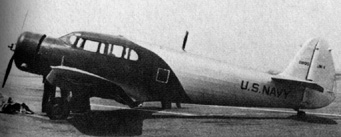
In 1936 the U.S. Navy acquired a single example of the five-seat Fairchild Model 45, for use primarily as a staff transport for more senior officers, but also for general communication duties. This aircraft was given the designation JK. It was a typical light transport aircraft of the 1930s, having a cantilever low-wing monoplane, and a fabric-covered welded-steel tube body. In early 1942, when civil aircraft were impressed to serve with the U.S. armed forces (until the U.S. industry had geared itself up to large-scale production), the U.S. Navy acquired two additional examples of the Model 45. These were designated JK-1, and were used for general communication and transport duties.
Type: transport/communication aircraft Crew: 5 Armament: none Specifications: Length: 30' 3" (9.22 m) Height: 8' 0" (2.44 m) Wingspan: 39' 6" (12.04 m) Wing area: 248 sq. ft (23.04 sq. m) Empty Weight: 2512 lb (1139 kg) Max Weight: 4000 lb (1814 kg) max at takeoff Propulsion: No. of Engines: 1 Powerplant: Wright R-760-E2 Whirlwind 7 radial Horsepower: 320 hp Performance: Range: 840 miles (1352 km) Cruise Speed: 164 mph ( 264 km/h) Max Speed: 170 mph ( 274 km/h) Ceiling: 19,000 ft (5790 m)
Stinson L-1 Vigilant

In 1940 the U.S. Army realized the need to reinforce its aircraft types in the two-seat light observation category. A
number of aircraft companies received contracts, including Stinson, which was contracted to produce 142 examples of a braced high-wing monoplane designated the O-49. The O-49s and 182 O-49As were later redesignated as L-1s and L-1As in 1942. Examples were also made available to the British via Lend-Lease, with the RAF naming them "Vigilant". Later examples of the L-1 included ambulance and float versions. Though later superceded by the more lightweight Grasshopper aircraft, L-1s saw widespread use in both the European and Pacific theatres.Type: liason/observation aircraft Crew: 2 Armament: none Specifications: Length: 34' 3" (10.44 m) Height: 10' 2" (3.10 m) Wingspan: 50' 11" (15.52 m) Wing area: 329 sq. ft (30.56 sq. m) Empty Weight: 2670 lb (1211 kg) Max Weight: 3400 lb (1542 kg) max at takeoff Propulsion: No. of Engines: 1 Powerplant: Lycoming R-680-9 radial Horsepower: 295 hp Performance: Range: 280 miles (451 km) Cruise Speed: N/A Max Speed: 122 mph ( 196 km/h) Ceiling: 12,800 ft (3900 m)
Taylorcraft L-2 Grasshopper
Originally designated the O-57A, the L-2 was one of several liason
aircraft named "Grasshopper" by the USAAC. Over a thousand examples of the L-2
were produced, serving a variety of liason roles.Type: two-seat liason aircraft/training glider Crew: 2 Armament: none Specifications: Length: 22' 9" (6.93 m) Height: 8' 0" (2.44 m) Wingspan: 35' 5" (10.79 m) Wing area: 181 sq. ft (16.81 sq. m) Empty Weight: 875 lb (397 kg) Max Weight: 1300 lb (590 kg) max at takeoff Propulsion: No. of Engines: 1 Powerplant: Continental O-170-3 flat-four Horsepower: 65 hp Performance: Range: 230 miles (370 km) Cruise Speed: (not listed) Max Speed: 88 mph ( 142 km/h) Ceiling: 10,000 ft (3050 m)
Aeronca L-3 Grasshopper
 Originally designated the O-58, the L-3 was one of several liason aircraft named "Grasshopper" by the USAAC. Approximately 1439 examples of the L-3 were manufactured before production ended in 1944. These served in a variety of liason roles; an unpowered version was also developed for the training of glider pilots.
Type: two-seat liason aircraft/training glider Crew: 2 Armament: none Specifications: Length: 21' 0" (6.40 m) Height: 7' 8" (2.34 m) Wingspan: 35' 0" (10.67 m) Wing area: 158 sq. ft (14.68 sq. m) Empty Weight: 835 lb (379 kg) Max Weight: 1300 lb (590 kg) max at takeoff Propulsion: No. of Engines: 1 Powerplant: Continental O-170 flat-four Horsepower: 65 hp Performance: Range: 200 miles (322 km) Cruise Speed: 46 mph ( 74 km/h) Max Speed: 87 mph ( 140 km/h) Ceiling: 10,000 ft (3050 m)
Piper L-4 Grasshopper

Originally designated the O-59, the L-4 was one of several liason aircraft named "Grasshopper" by the USAAC. Approximately 1439 examples of the L-3 were manufactured before production ended in 1944. These served in a variety of liason roles; an unpowered version was also developed for the training of glider pilots. The Navy also used a version of the Army L-4 that was designated the NE Grasshopper. Further Navy versions included the HE (re-designated the AE in 1943) hospital/ambulance version equipped to carry one stretcher in addition to the pilot.
Type: two-seat liason aircraft Crew: 2 Armament: none Specifications: Length: 21' 0" (6.40 m) Height: 7' 8" (2.34 m) Wingspan: 35' 0" (10.67 m) Wing area: 158 sq. ft (14.68 sq. m) Empty Weight: 835 lb (379 kg) Max Weight: 1300 lb (590 kg) max at takeoff Propulsion: No. of Engines: 1 Powerplant: Continental O-170 flat-four Horsepower: 65 hp Performance: Range: 200 miles (322 km) Cruise Speed: 46 mph ( 74 km/h) Max Speed: 87 mph ( 140 km/h) Ceiling: 10,000 ft (3050 m)
Stinson L-5 Sentinel

Originally designated the O-54 (with a later version known as the O-62), all types were re-designated L-5 in 1942 when the Observation category was changed to Liason. Approximately 1831 examples of the L-5 were manufactured, serving a variety of liason roles. Some Sentinels were modified to serve as an air ambulance, with an additional door being added for stretcher loading. The U.S. Marine Corps acquired 306 L-5s, which were designated OY-1 to denote their manufacture by Consolidated/Convair Aircraft.
Type: two-seat liason aircraft Crew: 2 Armament: none Specifications: Length: 24' 1" (7.34 m) Height: 7' 11" (2.41 m) Wingspan: 34' 0" (10.36 m) Wing area: 155 sq. ft (14.40 sq. m) Empty Weight: 1550 lb (703 kg) Max Weight: 2020 lb (916 kg) max at takeoff Propulsion: No. of Engines: 1 Powerplant: Lycoming O-435-1 Horsepower: 185 hp Performance: Range: 420 miles (676 km) Cruise Speed: (not listed) Max Speed: 130 mph ( 209 km/h) at 5500 ft Ceiling: 15,800 ft (4815 m)
Interstate L-6 Grasshopper

Originally designated the O-63, the L-6 was one of several liason aircraft named "Grasshopper" by the USAAC. Approximately 250 examples of the L-3 were manufactured, and they served in a variety of liason roles. While it was produced in fewer numbers than the other types of "Grasshoppers", a number were also built for the civilian market.
Type: observation and liason aircraft Crew: 2 Armament: none Specifications: Length: 23' 5.5" (7.15 m) Height: 7' 0" (2.13 m) Wingspan: 35' 6" (10.82 m) Wing area: 173.8 sq. ft (16.15 sq. m) Empty Weight: 1103 lb (500 kg) Max Weight: 1650 lb (748 kg) max at takeoff Propulsion: No. of Engines: 1 Powerplant: Franklin O-200-5 inline Horsepower: 102 hp Performance: Range: 540 miles (869 km) Cruise Speed: 105 mph ( 169 km/h) Max Speed: 114 mph ( 183 km/h) at 5500 ft Ceiling: 16,500 ft (1530 m)
Beechcraft Model 17/UC-43 Traveller

Widely known as the "Staggerwing", the Model 17 was first flown in 1934 and was the first design to appear from the factory of Walter Beech after he left the Travel Air organization. With its comfortable 4-5 seat cabin it quickly became established in the U.S. civil market. Comfort and performance were also among the requirements for the transport of senior U.S. military officers, and the Model 17 was evaluated by both the Army and the Navy for this role. At least 207 were purchased by the USAAF (under the designation UC-73), and both the USAAF and Navy impressed civilian models into their inventories as well.
Type: liason and communications aircraft Crew: 4-5 Armament: none Specifications: Length: 26' 2" (7.98 m) Height: 10' 3" (3.12 m) Wingspan: 32' 0" (9.75 m) Wing area: 296 sq. ft (27.50 sq. m) Empty Weight: 3085 lb (1399 kg) Max Weight: 4700 lb (2133 kg) max at takeoff Propulsion: No. of Engines: 1 Powerplant: Pratt & Whitney R-985-AN-1 Wasp Junior radial Horsepower: 450 hp Performance: Range: 500 miles (805 km) Cruise Speed: 170 mph ( 274 km/h) Max Speed: 198 mph ( 319 km/h) at 5000 ft Ceiling: 20000 ft (6095 m)
Fairchild UC-61/J2K Forwarder The Kreider-Reisner Company of Hagerstown, Maryland, was renamed the Fairchild Aircraft Company in 1935. Its Model 24-C three-seat touring airplane was first produced in 1933. Various modifications led to the -24R and -24W models, produced in 1939. The 24W-41 was developed for service with the USAAC as the UC-61 Forwarder, but, of 163 built, only 2 were retained. The rest were supplied to the United Kingdom under lend-lease and were known as the Argus I. It was adopted as the Air Transport Auxiliary's sta ndard transport for the carriage of ferry pilots. A further 512 UC-61As were built to a USAAC order, with 364 of these going to the U.K. as Argus IIs. A number of civil models were also impressed into Army Air Corp service in 1942, designated UC-61B to UC-61J. The U.S. Navy use of the Fairchild 24 was limited to two J2K-1s and two J2K-2s acquired for the U.S. Coast Guard in 1936. A further 13 24W-40s were acquired by the Navy in 1940 and 1942 for instrument training and personnel transport under the design ation GK-1.Type: liason & communication aircraft/instrument trainer Crew: 4 Armament: none Specifications: Length: 23' 9" (7.24 m) Height: 7' 7.5" (2.32 m) Wingspan: 36' 4" (11.07 m) Wing area: 193.3 sq. ft (17.96 sq. m) Empty Weight: 1613 lb (732 kg) Max Weight: 2562 lb (1162 kg) max at takeoff Propulsion: No. of Engines: 1 Powerplant: Warner R-500 Super Scarab radial Horsepower: 165 hp Performance: Range: 640 miles (1030 km) Cruise Speed: 117 mph ( 188 km/h) Max Speed: 132 mph ( 212 km/h) Ceiling: 15,700 ft (4785 m)
ObservationDouglas O-46
The O-46A, the last of a long line of Douglas observation planes, was a victim of progress. It was designed to operate from established airfields behind fairly static battle lines as in WW I. However, in 1939, a report was issued on the O-46A which stated that it was too slow and heavy to out-run and out-maneuver enemy pursuit planes, too heavy to operate from small, wet, unprepared fields, and too large to conceal beneath trees. This report was a forecast of the future, for WW II with its rapidly changing battle lines proved the need for light, maneuverable observation aircraft which could operate from unimproved airstrips. Consequently, in 1942, the "O" (observation) designation was changed to "L" (liaison). The Air Corps ordered 90 O-46As in 1935. At least 11 saw overseas duty; two were destroyed in the Japanese raid on Clark Field in the Phillipines on Dec. 8, 1941. The remainder were declared obsolete in late 1942 and after that were used primarily in training and utility roles.Type: observation Crew: two Armament: Two .30 cal. Browning machine guns (one wing mounted and one flexible) Specifications: Length: 34' 9.5" Height: 10' 4" Wingspan: 45' 9" Wing area: N/A Empty Weight: N/A Max Weight: 6100 lb max at takeoff Propulsion: No. of Engines: 1 Powerplant: Pratt & Whitney R-1535 Horsepower: 725 hp Performance: Range: 635 miles Cruise Speed: 171 mph Max Speed: 200 mph Ceiling: 24,150 ft
North American O-47

The O-47 was developed as a replacement for O-19 and O-38 observation biplanes. It was larger and heavier than most preceding observation aircraft and its crew of three sat in tandem under the long canopy. Windows in the deep belly overcame the obstacle that the wings presented to downward observation and photography. The design for the XO-47 prototype originated in 1934 with General Aviation, a subsidiary of North American Aviation, as the GA-15. The Air Corps ordered 174 O-47s in 1937-38, 93 of which were assigned to National Guard units. In 1938, the Army ordered 74 O-47Bs with a redesigned engine cowling for better cooling, a more powerful engine, and improved radio equipment. Training maneuvers in 1941 demonstrated the shortcomings of the O-47. Light airplanes proved more capable of operating with ground troops, while fighters and twin-engine bombers showed greater ability to perform recon and photo duties. Thus, during WW II, O-47s were relegated to such duties as towing targets, coastal patrol, and anti-submarine patrol.Type: observation Crew: 3 Armament: One fixed forward-firing .30-cal. machine gun one flexible .30-cal. machine gun in rear cockpit Specifications: Length: 33' 7" (10.24 m) Height: 12' 2" (3.71 m) Wing span: 46' 4" (14.12 m) Wing area: 350.0 sq. ft (32.51 sq. m) Empty Weight: 5980 lbs (2712 kg) Takeoff Weight: 7636 lbs (3463 kg) maximum Propulsion: No. of Engines: 1 Powerplant: Wright R-1820-49 Horsepower: 975 hp Performance: Range: 750 miles (1207 km) Cruise Speed: 200 mph (322 km/hr) Max Speed: 221 mph (355 km/hr) Ceiling: 23,200 ft (7071 m)
Ryan YO-51 Dragonfly
Debutting in 1940, Ryan's Dragonfly was an observation/liason aircraft that (thanks to the full-span flaps on its parasol wing) could perform in the STOL (Short TakeOff and Landing) role. Except for its very cylinderical fuselage, the Dragonfly somewhat resembled the German Storch. The US Army gave it the designation O-51, but with only three examples being built, it never proceeded beyond the YO-51 designation.
Type: observation aircraft Crew: 2: Pilot, observer Armament: N/A Specifications: Length: N/A Height: N/A Wingspan: 52' 0" Wing area: N/A Empty Weight: 4206 lb Max Weight: N/A Propulsion: No. of Engines: 1 Powerplant: Pratt & Whitney R-985-21 radial Horsepower: 440 hp Performance: Range: N/A Cruise Speed: N/A Max Speed: N/A Ceiling: N/A
Curtiss O-52 Owl
 In the 1930s the US Army notified Curtiss Wright of its requirements for a two-seat observation aircraft. As a result Curtiss designed their Model 85 aircraft, which showed that efforts had clearly been made to confer good low-speed manoeuverability and landing characteristics. Ordered into production in 1939, some 203 Owls were built for the US Army under the designation O-52, with deliveries beginning in 1940. None, however, were used in first-line service, all being directed for use in training roles.Type: observation aircraft Crew: 2: Pilot, observer/gunner Armament: one .30 cal forward firing machine gun one .30 cal rear firing machine gun Specifications: Length: 26' 4" (8.03 m) Height: 9' 3.25" (2.83 m) Wingspan: 40' 9.5" (12.43 m) Wing area: 210.4 sq. ft (19.55 sq. m) Empty Weight: 4231 lb (1919 kg) Max Weight: 5364 lb (2433 kg) max at takeoff Propulsion: No. of Engines: 1 Powerplant: Pratt & Whitney R-1340-51 Wasp radial Horsepower: 600 hp Performance: Range: 700 miles (1127 km) Cruise Speed: 192 mph ( 309 km/h) Max Speed: 220 mph ( 354 km/h) Ceiling: 21,000 ft (6400 m)
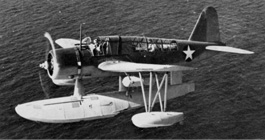
Vought OS2U-3 Kingfisher
 The Kingfisher was the U.S. Navy's first catapult-launched monoplane observation aircraft. It came in both float and land-based configurations, and served as observer aircraft, anti-submarine aircraft, and rescue aircraft. The most famous incident involving a Kingfisher was the rescue of Captain Eddie Rickenbacker, who ditched in the Pacific in a B-17 during 1942. A Kingfisher picked up Rickenbacker and two other crew members (who still remained following a rescue the previous day) but the Kingfisher could not take off because the load was too great. The OS2U pilot taxied on the surface over 40 miles to make the nearest landfall with everyone aboard.
Type: observation aircraft Crew: 2: Pilot, observer/gunner Armament: one .30 cal forward firing machine gun one .30 cal rear firing machine gun two 100 lb.bombs, or 325 lb. depth charges Specifications: Length: 33' 10" (10.31 m) Height: 15' 1.5" (4.61 m) Wingspan: 35' 11" (10.95 m) Wing area: 262 sq. ft (24.34 sq. m) Empty Weight: 4123 lb (1870 kg) Max Weight: 6000 lb (2722 kg) max at takeoff Propulsion: No. of Engines: 1 Powerplant: Pratt & Whitney R-985-AN-2 Wasp Junior radial Horsepower: 450 hp Performance: Range: 805 miles (1296 km) Cruise Speed: 119 mph ( 292 km/h) at 5000 ft Max Speed: 164 mph ( 264 km/h) at 5500 ft Ceiling: 13,000 ft (3960 m)