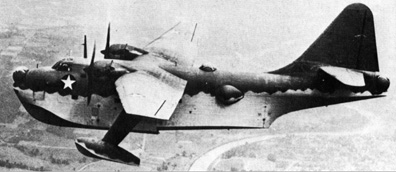
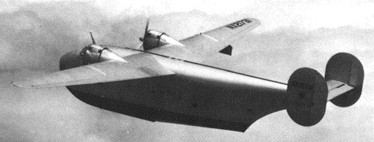
Seaplanes
Grumman G-44/J4F Widgeon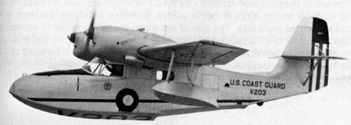
The success of the eight-seat Grumman Goose led to development of smaller, cheaper version that came to be known as the Grumman Widgeon. The type was acquired by the USAAC in 1942 under the designation OA-14, and by the U.S. Navy and Coast Guard under the designation J4F. In August 1942 a Widgeon scored the first Coast Guard kill of an enemy submarine when a J4F stationed in Louisiana sank the U-166 off of the Passes of Mississippi.
Type: transport/coastal/anti-submarine aircraft
Crew: 2, plus 3 passengers
Armament: one 325 lb. depth charge
Specifications:
Length: 31' 1" (9.47 m)
Height: 11' 5" (3.48 m)
Wingspan: 40' 0" (12.19 m)
Wing area: 245 sq. ft (22.76 sq. m)
Empty Weight: 3189 lb (1447 kg)
Max Weight: 4500 lb (2041 kg) max at takeoff
Propulsion:
No. of Engines: 2
Powerplant: Ranger L-440C-5 inline engine
Horsepower: 200 hp each
Performance:
Range: 920 miles (1481 km)
Cruise Speed: 138 mph ( 222 km/h)
Max Speed: 153 mph ( 246 km/h)
Ceiling: 14,600 ft (4450 m)
Grumman JF Duck
 First delivered in 1934, the Duck was a versatile aircraft that continued to
be ordered by the U.S. Navy until 1940. Most of the JF/JF2 Ducks remained in
service throughout the war, operated both from carriers and land bases in a
variety of roles, including patrol, photo-survey, rescue, and
target-towing.
First delivered in 1934, the Duck was a versatile aircraft that continued to
be ordered by the U.S. Navy until 1940. Most of the JF/JF2 Ducks remained in
service throughout the war, operated both from carriers and land bases in a
variety of roles, including patrol, photo-survey, rescue, and
target-towing.Type: 2/3-seat utility amphibian
Crew: 2-3: Pilot, observer, gunner
Armament: normally none, but provision for
two 325 lb. depth charges
Specifications:
Length: 34' 0" (10.36 m)
Height: 13' 11" (4.24 m)
Wingspan: 39' 0" (11.89 m)
Wing area: 409 sq. ft (38.00 sq. m)
Empty Weight: 4400 lb (1996 kg)
Max Weight: 7700 lb (3493 kg) max at takeoff
Propulsion:
No. of Engines: 1
Powerplant: Wright R-1820-54 Cyclone 9 radial
Horsepower: 900 hp
Performance:
Range: 750 miles (1207 km)
Cruise Speed: 155 mph ( 249 km/h)
Max Speed: 190 mph ( 306 km/h)
Ceiling: 25,000 ft (7620 m)
Northrop N-3PB
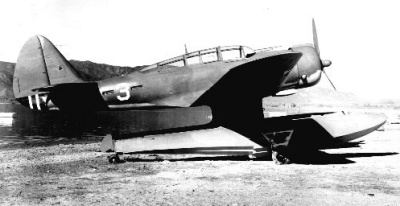
The Northrop N-3PB was the first aircraft designed by the newly formed
Northrop Aircraft, Inc. that was actually produced by that company. It was
originally designed in 1939 to meet a specification for a seaplane patrol bomber
to be used by Norway. The three-place, single-engine, cantilevered low-wing
monoplane patrol bomber had two floats attached by full cantilever pedestals to
the left and right wings. The first flight test took place on 1 November 1940 at
Lake Elsinore, California. The Northrop N-3PB was soon identified as the world's
fastest military sea plane. 24 aircraft were ordered by Norway on 12 March 1940.
Within the short span of eight months, the first production aircraft rolled off
the Northrop assembly line. In May of 1941 eighteen N-3PBs arrived in Reykjavik,
Iceland. Twelve of these aircraft were immediately assigned to Norwegian 330
Squadron (based in Iceland). During the war, one of the N-3PBs (No. 320 -"U")
was lost on a ferry flight while crash-landing on a frozen river in Iceland.
Thirty-six years later the aircraft was recovered, and in November 1979, the
wreck was flown to the Northrop Aircraft Division plant at Hawthorne, California
to be fully restored. A year later, on November 10th, 1980, the only remaining
example of the Northrop N-3PB was rolled out, following a complete restoration
by volunteers of the The Western Museum of Flight. After restoration, the N-3PB
was donated to Norway, and is currently on display in Oslo, Norway.
Type: patrol bomber/torpedo bomber floatplane
Crew: 3
Armament: (4) 50-cal guns
(2) 30-cal guns
(1) 2,000 torpedo, or equivalent bombload
Specifications:
Length: 38' (10.97 m)
Height: 12' (3.66 m)
Wingspan: 48' 11" (14.91 m)
Wing area: 376.8 sq. feet (34.93 m)
Empty Weight: (2808 kg)
Takeoff Weight: 10,600 lbs.
Max Weight: (4808 kg)
Propulsion:
No. of Engines: 1
Powerplant: Wright GR-1820-G205A
Horsepower: 1200 hp
Performance:
Range: 1400 miles (1609 km)
Cruise Speed: 215 mph (296 km/hr)
Max Speed: 257 mph (419 km/hr)
Ceiling: 28,400 ft (7392 m)
Curtiss SC Seahawk

The SC Seahawk was developed in 1942 to replace the Curtiss Seamew and the Vought
Kingfisher, which were both 1937 designs. The Seahawk was required to be
convertible from a float version to a landing gear configuration and vice versa.
The first production aircraft were delivered in October 1944.
Curtiss SC Seahawk
Type: scout or anti-submarine aircraft
Crew: 1: Pilot
Armament: two .50 cal forward firing machine guns
up to 650 lb. of bombs
Specifications:
Length: 36' 4.5" (11.09 m)
Height: 12' 9" (3.89 m)
Wingspan: 41' 0" (12.50 m)
Wing area: 280 sq. ft (26.01 sq. m)
Empty Weight: 6320 lb (2867 kg)
Max Weight: 9000 lb (4082 kg) max at takeoff
Propulsion:
No. of Engines: 1
Powerplant: Wright R-1820-62 Cyclone radial
Horsepower: 1350 hp
Performance:
Range: 625 miles (1006 km)
Cruise Speed: 125 mph ( 210 km/h)
Max Speed: 313 mph ( 504 km/h) at 28,600 ft
Ceiling: 37,300 ft (11,370 m)
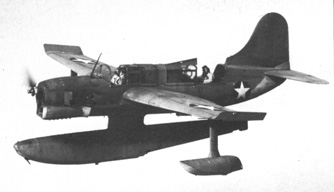
Curtiss SO3C Seamew

The SO3C Seamew was a seaplane that was ordered as a replacement for the SOC Seagull aboard the U.S. Navy's battleships and cruisers. The type went into service in 1942, but was not a success and all
seamews were withdrawn early in 1944. Note: the second picture shows the
lesser-known non-seaplane version.
Curtiss SO3C Seamew
Type: scout/observation aircraft Crew: 2: Pilot, observer/gunner Armament: one .30 cal forward firing machine gun one .50 cal rear firing machine gun two 100 lb.bombs, or 325 lb. depth charges Specifications: Length: 36' 10" (11.23 m) Height: 15' 0" (4.57 m) Wingspan: 38' 0" (11.58 m) Wing area: 290 sq. ft (26.98 sq. m) Empty Weight: 4284 lb (1943 kg) Max Weight: 5729 lb (2599 kg) max at takeoff Propulsion: No. of Engines: 1 Powerplant: Ranger SGV-770-8 inline Horsepower: 600 hp Performance: Range: 1150 miles (1851 km) Cruise Speed: 125 mph ( 201 km/h) Max Speed: 172 mph ( 277 km/h) at 8100 ft Ceiling: 15,800 ft (4815 m)Curtiss SOC Seagull

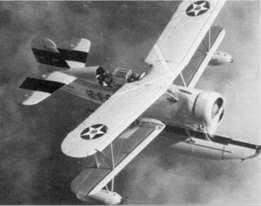
The last of the Curtiss biplanes to be used operationally by the U.S. Navy, the SOC Seagull had a service history similar to the British Fairey Swordfish. Both were naval biplanes, both originated in 1933, both should have become obsolete during the early stages of the war, and both remained operational until the end of the war, while surviving, superbly, later designs intended to replace them.
Curtiss SOC SeagullType: scout/observation aircraft Crew: 2: Pilot, observer/gunner Armament: one .30 cal forward firing machine gun one .30 cal rear firing machine gun up to 650 lb. of bombs Specifications: Length: 26' 6" (8.08 m) Height: 14' 9" (4.50 m) Wingspan: 36' 0" (10.97 m) Wing area: 342 sq. ft (31.77 sq. m) Empty Weight: 3788 lb (1718 kg) Max Weight: 5437 lb (2466 kg) max at takeoff Propulsion: No. of Engines: 1 Powerplant: Pratt & Whitney R-1340-18 Wasp radial Horsepower: 600 hp Performance: Range: 675 miles (1086 km) Cruise Speed: 133 mph ( 214 km/h) Max Speed: 165 mph ( 266 km/h) at 5000 ft Ceiling: 14,900 ft (4540 m)
Flying Boats
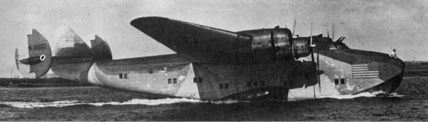
Boeing B-314
The B-314s, better known as the "Clippers" operated a transatlantic service for Pan American Airways. Of the nine 314s, four were requistioned by the Army Transport Command (designated C-98s), three of these being transferred to the Navy (along with two more civil 314s).
Boeing B-314Type: long range flying boat transport Crew: ?, plus 74 passengers Armament: none Specifications: Length: 106' 0" (32.31 m) Height: 27' 7" (8.41 m) Wingspan: 152' 0" (46.33 m) Wing area: 2867 sq. ft (266.34 sq. m) Empty Weight: 50,268 lb (22,801 kg) Max Weight: 82,500 lb (37,421 kg) max at takeoff Propulsion: No. of Engines: 4 Powerplant: Wright R-2600 Cyclone 14 radial Horsepower: 1600 hp Performance: Range: 3500 miles (5633 km) Cruise Speed: 183 mph ( 295 km/h) Max Speed: 193 mph ( 311 km/h) at 10000 ft Ceiling: 13,400 ft (4085 m)
Douglas Dolphin
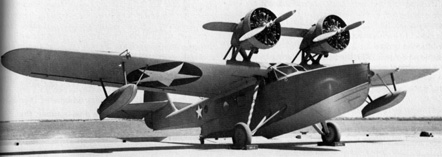
The Dolphin was introduced in 1930 by the Douglas company, and examples were eventually ordered by all the U.S. armed forces, with the first aircraft going to the U.S. Coast Guard. The Dolphins were used for transport and rescue duties, as well as security patrols along the U.S. coastline. Dolphins were recognizable by a aerofoil structure above the engines that was used to provide bracing for the two engines.
Douglas Dolphin
Type:		amphibian flying boat
Crew:		2, with 6 passengers
Armament: 	none

Specifications:
	Length:        	45' 1" (13.74 m)
	Height:        	14' 0" (4.27 m)
	Wingspan:      	60' 0" (18.29 m)
	Wing area:	592 sq. ft (55.00 sq. m)
	Empty Weight:  	7000 lb (3175 kg)
	Max Weight: 	9530 lb (4323 kg) max at takeoff

Propulsion:
	No. of Engines:	2
	Powerplant:    	Pratt & Whitney R-1340-96 Wasp radial
	Horsepower:	450 hp each

Performance:
	Range:		720 miles (1159 km)
	Cruise Speed:   135 mph ( 217 km/h)
	Max Speed:      156 mph ( 251 km/h) at 9000 ft
	Ceiling:       	17,000 ft (5180 m)
Grumman G-21A / JRF Goose
 First flown in 1937, the G-21 Goose was procured by the U.S. Army in 1938 under the designation OA-9, with others purchased from private owners being called OA-13As. The U.S. Navy also purchased the type, and designated it JRF, with numerous versions. The Goose was used for transport, photographic survey, search and rescue, navigational training, and other purposes.
Grumman G-21A / JRF Goose
Type: multi-role amphibian flying boat Crew: 2, plus 4-6 passengers Armament: two 250 lb. depth charges Specifications: Length: 38' 4" (11.68 m) Height: 15' 0" (4.57 m) Wingspan: 49' 0" (14.94 m) Wing area: 375 sq. ft (34.84 sq. m) Empty Weight: 5425 lb (2461 kg) Max Weight: 7955 lb (3608 kg) max at takeoff Propulsion: No. of Engines: 2 Powerplant: Pratt & Whitney R-985-AN6 Wasp Junior radial Horsepower: 450 hp each Performance: Range: 640 miles (1030 km) Cruise Speed: 191 mph ( 307 km/h) at 5000 ft Max Speed: 201 mph ( 323 km/h) at 5000 ft Ceiling: 21,000 ft (6400 m)
The Hughes H-4 Hercules (also known as the "Spruce Goose"; is a prototype heavy transport
Hughes H-4 (HK-1) Hercules (“Spruce
Goose”)
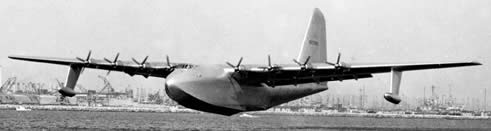
aircraft designed and built by the Hughes Aircraft company. The aircraft made its
first and only flight on November 2, 1947, and the project never advanced beyond
the single example produced. Built from wood because of Wartime restrictions on the use
of aluminum and concerns about weight, its critics nicknamedit the "Spruce Goose," despite
it being made almost entirely of birch rather than spruce. The Hercules isthe largest
flying boat ever built and has the largest wingspan of any aircraft in history. It
survives in good condition at the Evergreen Aviation Museum in McMinnville, Oregon, USA.
Hughes H-4 (HK-1) Hercules (“Spruce
Goose”)
Type: long range passenger/cargo flying boat
Crew: n/a
Crew: n/a
Armament: none
Length: 219' (66.4m)
Height: 79' (24m)
Wingspan: 320 feet (96.9m)
Wing area: 11,430 square feet (1050 sq m)
Empty Weight: n/a
Max Weight: 400,000 pounds
Propulsion:
No. of Engines: 8
Powerplant: Pratt and Whitney 28 cylinder R-4360
Horsepower: 3000 hp each
Performance:
Range: 3,000-3,500 miles
Cruise Speed: 200 mph (322km/h)
Max Speed: n/a
Ceiling: 20,900 ft
Hall PH
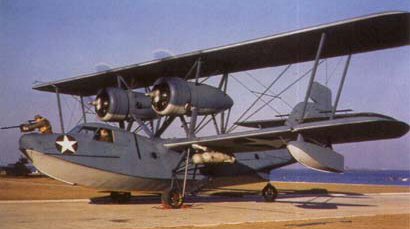
The Hall Aluminum Aircraft company produced a small number of flying boats
during the 1930s, tracing their lineage back to Curtiss seaplane designs and
British flying boats of WWI. The Hall flying boats served with the U.S. Navy and
the Coast Guard during the war as maritime patrol aircraft, and when they were
phased out by newer monoplane designs during the war they had the distinction of
being the last of the U.S. Navy's last active biplane flying boats.
Hall PH
Type:		patrol, search & rescue flying boat
Crew:		six
Armament: 	up to 1000 lbs. of depth bombs

Specifications:
	Length:        	51' 0" (15.54 m)
	Height:        	19' 10" (6.05 m)
	Wingspan:      	72' 10" (22.20 m)
	Wing area:	1170 sq. ft (108.69 sq. m)
	Empty Weight:  	9614 lb (4361 kg)
	Max Weight: 	17,679 lb (8019 kg) max at takeoff

Propulsion (N3N-3):
	No. of Engines:	2
	Powerplant:    	Wright R-1820-F51 Cyclone 9 radial
	Horsepower:	750 hp each

Performance:
	Range:		1937 miles (3117 km)
	Cruise Speed:   138 mph ( 222 km/h)
	Max Speed:      159 mph ( 256 km/h)
	Ceiling:       	21,350 ft (6505 m)
Martin JRM MarsJRM-2 XPB2M-1R
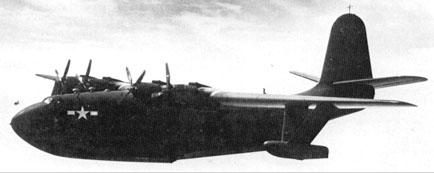
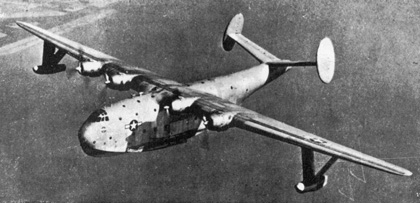
In 1938 the Martin JRM Mars was developed to be a long-range patrol bomber,
but by the time of the prototype (designated the XPB2M-1) made its first flight
in 1943, its role and designation had been changed to that of a transport. At
the time the Mars was built it was the world's largest flying boat, though only
six examples were ever built. The first JRM-1 crashed on its maiden flight in
July 1945, though the other five continued to serve until they were withdrawn in
November 1956. In 1959 the largest flying boats to have ever served with the
U.S. Navy were all sold to Canada for use as fire-fighting water bombers, where
some still remain in use some forty years later.
Martin JRM Mars
Type:		long range passenger/cargo flying boat
Crew:		7
Armament: 	none
	Length:        	117' 3" (35.74 m)
	Height:        	38' 5" (11.71 m)
	Wingspan:      	200' 0" (60.96 m)
	Wing area:	3683 sq. ft (342.15 sq. m)
	Empty Weight:  	75,573 lb (34,279 kg)
	Max Weight: 	165,000 lb (74,843 kg) max at takeoff

Propulsion:
	No. of Engines:	4
	Powerplant:    	Wright R-3350-18 Duplex Cyclone radial
	Horsepower:	2200 hp each

Performance:
	Range:		4945 miles (7958 km)
	Cruise Speed:   149 mph ( 240 km/h)
	Max Speed:      221 mph ( 356 km/h) at 4500 ft
	Ceiling:       	14,600 ft (4450 m)
Sikorsky JRS-1
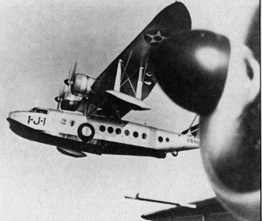
In 1935 Sikorsky produced a 15 passenger flying boat called the  S-43, which soon went into service with a number of civilian airlines. The U.S.
Navy/Marines acquired 17 of these flying boats under the designation JRS-1, and
the USAAC acquired 6 examples (most under the designation Y1OA-8). All of the
Army, Navy, and Marine aircraft remained in service throughout World War
II.
Sikorsky JRS-1
Type:		utility transport amphibian flying boat
Crew:		3-4, with 15 passengers
Armament:	none

Specifications:
	Length:        	51' 2" (15.60 m)
	Height:        	17' 8" (5.38 m)
	Wingspan:      	86' 0" (26.21 m)
	Wing area:	780.6 sq. ft (72.52 sq. m)
	Empty Weight:  	12,750 lb (5783 kg)
	Max Weight: 	19,096 lb (8662 kg) max at takeoff

Propulsion:
	No. of Engines:	2
	Powerplant:    	Pratt & Whitney R-1690-52 Hornet radial
	Horsepower:	750 hp each

Performance:
	Range:		775 miles (1247 km)
	Cruise Speed:   166 mph ( 267 km/h) at 7000 ft
	Max Speed:      190 mph ( 306 km/h) at 7000 ft
	Ceiling:       	20,700 ft (6310 m)
Sikorsky JR2S-1
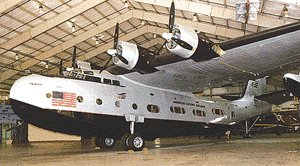
The prototype for the VS-44 was first flown on August 13, 1937. The Sikorsky
 1942, the US Navy gave AEA a contract to operate a wartime route
across the Atlantic. The airline's temporary civil certificate, to cover a
non-stop VS-44 had a maximum range of 3,800 miles when carrying a payload of 5,000
pounds. American Export Airlines ordered three for a planned transatlantic route
to the UK and France, although there were delays in obtaining CAB approval. On
January 12,New York-Foynes (Ireland) service was granted on February 10, 1942, and
continued throughout the war. One VS-44, used post-war by Antilles Air Boats,
survives in the museum at Windsor Locks, Connecticut.  During WWII three VS-44
Sikorsky "Excalibur" passenger flying boats for American Export Airlines were
completed as XJR2S-1 for the Navy, but flown by AEA under contract.
Sikorsky JR2S-1
Type:		utility transport amphibian flying boat
Crew:		?
Armament:	none

Specifications:
	Length:        	76' 2" (also listed as 80')
	Height:        	N/A
	Wingspan:      	124' 0"
	Wing area:	N/A
	Empty Weight:  	N/A
	Max Weight: 	N/A

Propulsion:
	No. of Engines:	4
	Powerplant:    	Pratt & Whitney Twin Wasp air-cooled engines
	Horsepower:	1200 hp each

Performance:
	Range:		3,800 miles
	Cruise Speed:   N/A
	Max Speed:      235 m.p.h
	Ceiling:       	N/A
Consolidated P2Y
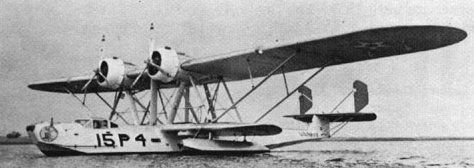
Designed in response to a 1931 contract for a replacement for the PY-1 flying boat, the P2Y sesquiplane flying boat served in Navy squadrons from 1933 to the end of 1941, when all of the P2Ys were withdrawn from operational use (being replaced by the more advanced Consolidated PBY Catalina. A number of P2Ys served at NAS Pensacola in a
training role during 1941-3, but otherwise they were not actively used during the war.
Consolidated P2Y
Type:           Patrol Flying Boat
Crew:           five
Armament:       two dorsal gun hatches behind wings
                one .30 cal machine gun in bow
                2,000 lbs. of bombs or depth charges

Specifications:
        Length:         61' 9"
        Height:         19' 1"
        Wingspan:       100'
        Weight:         12,769 empty, 25,266 gross
	Wing Area:	1514 sq. feet

Propulsion:
        No. of Engines: 2
        Powerplant:     Wright R-1820-90
        Horsepower:     750 hp each

Performance:
        Range:          1180 miles with 2000 lb bombload
        Cruise Speed:   117 mph
        Max Speed:      139 mph at 4000 feet
        Ceiling:        16,100 ft
Martin PBM Mariner


The first Martin PBM Mariner flying boats were produced in April 1941, and
the last were manufactured eight years later. The Mariner underwent a few
modifications and versions in its lifespan, and served well wherever it was
used. Martin PBM-3D Mariner Type:		seven/eight-seat patrol flying boat
Crew:		7-8
Armament: 	eight .50 cal machine guns
		up to 8,000 lbs. of bombs or depth charges

Specifications:
	Length:        	79' 10" (24.33 m)
	Height:        	27' 6" (8.38 m)
	Wingspan:      	118' 0" (35.97 m)
	Wing area:	1408 sq. ft (130.80 sq. m)
	Empty Weight:  	33,175 lb (15,048 kg)
	Max Weight: 	58,000 lb (26,308 kg) max at takeoff

Propulsion:
	No. of Engines:	2
	Powerplant:    	Wright R-2660-22 Cyclone radial
	Horsepower:	1900 hp each

Performance:
	Range:		2240 miles (3605 km)
	Cruise Speed:   (not listed)
	Max Speed:      211 mph ( 340 km/h) at 1500 ft
	Ceiling:       	19,800 ft (6035 m)
Naval Aircraft Factory PBN Nomad
While Consolidated employees worked to produce the PBY-5, their
counterparts at the Naval Aircraft Factory in Philadelphia worked to improve it.
During 1940 NAF engineers developed several worthwhile hydrodynamic and
aerodynamic modifications for the plane, but these couldn't be incorporated
without stopping Consolidated's production lines and slowing much-needed
deliveries of the current model. So the navy took a different tack: on 16 July
1941 an order for 156 modified PBY-5s went to the Naval Aircraft Factory itself.
The NAF version, designated PBN-1 and named "Nomad," featured a longer hull - 64
feet 8 inches - a sharper bow, a 20 percent taper step amidships, and a shallow
breaker step just forward of the tail. Wing tip floats were redesigned for more
lift and improved planing. More fuel tanks were added in the wing center
section. Wings were strengthened to carry 38,000 pounds gross weight. A new
electrical system was installed. The most noticeable change, however, was the
two feet in height added to the vertical fin. The armament was unchanged with
one exception: a .50-caliber machine gun in a hydraulically powered turret
replaced the .30-caliber gun in the bow. The first Nomad didn't come off the NAF
assembly line until February 1943, and even then the navy got little use from
the design. Of the 156 PBN-ls produced, 138 went to the U.S.S.R. under
Lend-Lease. A modified Nomad design was produced by Consolidated late in World
War II as the PBY-6A amphibian - the first was delivered in January 1945. It
differed from the PBN-1 boats in having a 63-foot hull, a radome above the
cockpit, and a rotating ball turret on the bow fitted with twin .30-caliber
machine guns. This turret was also used on late-model PBY-5As.
Naval Aircraft Factory PBN-1 Nomad
Type:		Naval Patrol Bomber (Flying Boat)
Crew:		9
Armament: 	three .50 cal machine guns
                one .30 cal machine guns
                up to 4,000 lbs. of bombs or two torpedoes

Specifications:
	Length:        	64' 8"
	Height:        	17' 11"
        Wingspan:       104' (31.70 m)
        Weight:         38000 lb maximum at takeoff

Propulsion:
        No. of Engines: 2
        Powerplant:     Pratt & Whitney R-1830-92 Twin Wasp
        Horsepower:     1200 hp each

Performance (mostly unavailable for PBN, PBY listed instead):
        Range:          2545 miles (PBY)
        Cruise Speed:   117 mph for long range (PBY)
        Max Speed:      195 mph (PBN)
        Ceiling:        14700 ft (PBY)
Consolidated PBY Catalina


The most famous flying boat of WW II, the PBY Catalina was built in large numbers, and some are still in use today. While it was slow by contemporary standards, the PBY more than made up for its lack of speed with its reliability and great range, as well as the fact that as a flying boat it could land on the water for rescue missions. Its long range made it an excellent reconnaissance aircraft over the world's oceans. It could be used as a bomber when other aircraft were unavailable, and Catalinas attacked targets at sea with bombs, depth charges, and even torpedoes.
Consolidated PBY-5A Catalina
Type: Amphibious Patrol Bomber (Flying Boat) Crew: seven Armament: two .50 cal machine guns three .30 cal machine guns up to 4,000 lbs. of bombs or depth charges Specifications: Length: 63' 10.5" (19.47 m) Height: 20' 2" (6.5 m) Wingspan: 104' (31.70 m) Weight: 35420 lb maximum at takeoff Propulsion: No. of Engines: 2 Powerplant: Pratt & Whitney R-1830-92 Twin Wasp Horsepower: 1200 hp each Performance: Range: 2545 miles (4096 km) Cruise Speed: 117 mph (188 km/h) long range Max Speed: 179 mph (288 km/h) Ceiling: 14700 ft (4480 m)
Consolidated PB2Y Coronado
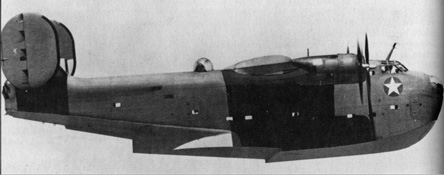
The Coronado resulted from a U.S. Navy request for the development of a
maritime patrol bomber larger than the PBY Catalina, one that would have
increased performance and good weapon load capability. Though the prototype
first flew in December 1937, the Navy did not have the funds at that time to
procure the aircraft, and Consolidated had to wait 15 months before orders were
placed. During that time improvements in the aircraft's stability and
hydrodynamic performance were made, so that the 1939 version was considerably
improved. Variants served with the U.S. Navy from 1940 on, with 10 examples
being used by the RAF.
Consolidated PB2Y Coronado
Type:		long range flying boat bomber
Crew:
Armament: 	eight .50 cal machine guns
		up to 12,000 lbs. of bombs

Specifications:
	Length:        	79' 3" (24.16 m)
	Height:        	27' 6" (8.38 m)
	Wingspan:      	115' 0" (35.05 m)
	Wing area:	1780 sq. ft (165.36 sq. m)
	Empty Weight:  	40,935 lb (18,568 kg)
	Max Weight: 	68,000 lb (30,844 kg) max at takeoff

Propulsion:
	No. of Engines:	4
	Powerplant:    	Pratt & Whitney R-1830-88 Twin Wasp radial
	Horsepower:	1200 hp each

Performance:
	Range (w/ 8000 lb. bombload): 1370 miles (2205 km)
	Max Range:	2370 miles (3814 km)
	Cruise Speed:   141 mph ( 227 km/h)
	Max Speed:      223 mph ( 359 km/h) at 1500 ft
	Ceiling:       	20,500 ft (6250 m)
Boeing XPBB-1 Sea Ranger


 The frequent appearance of German U-Boats close to U.S. coastal
waters made the U.S. Navy aware that it needed a long-range maritime patrol
aircraft. Because Boeing had considerable experience with flying boats (the most
famous being the Boeing 314-A "Clipper" used by Pan Am Airways), the Navy
approached Boeing about designing a suitable aircraft for its purposes. In June
1940 a contract was awarded for a prototype XPBB-1, with the first flight taking
place in July 1942. Unfortunately for Boeing, changing ideas regarding maritime
patrol aircraft brought cancellation of the order for the U.S. Navy's XPBB-1 Sea
Rangers, and this excellent flying boat never proceeded beyond the prototype
stage. The sole example of the Sea Ranger was unofficially given the name "The
Lone Ranger".Boeing XPBB-1 Sea Ranger Type:		long-range maritime patrol/bomber flying boat
Crew:
Armament: 	eight .50 inch machine guns
		up to 20,000 lbs. (9,072 kg) of bombs

Specifications:
	Length:        	94' 9" (28.88 m)
	Height:        	34' 2" (10.41 m)
	Wingspan:      	139' 8.5" (42.58 m)
	Wing area:	1826 sq. ft (169.64 sq. m)
	Empty Weight:  	41,531 lb (18,838 kg)
	Max Weight: 	101,130 lb (45,872 kg) max at takeoff

Propulsion:
	No. of Engines:	2
	Powerplant:    	Wright R-3350-8 Cyclone radial
	Horsepower:	2300 hp each

Performance:
	Range:		6300 miles (10,140 km)
	Max Endurance:	72 hours
	Cruise Speed:   158 mph ( 254 km/h)
	Max Speed:      228 mph ( 367 km/h) at 14,200 ft
	Ceiling:       	22,400 ft (6830 m)

Consolidated XP4Y-1

In 1938 Consolidated undertook the design of a flying boat
designated as the Model 31. It featured retractable wing floats, flush-riveted
skins, and a Davis wing. The prototype flew in 1939, but the war in Europe led
to a shift in purpose from civilian to military applications for the aircraft.
Consolidated was awarded a contract for a single prototype for the U.S. Navy,
designated XP4Y-1 and unofficially named Corregidor. This was followed by almost
three years of redesign and testing (including the addition of three dummy
turrets for flight testing). Service tests were satisfactory and large-scale
construction was planned, but in the summer of 1943 a shortage of the Wright
R-3350 engines which powered the XP4Y-1 led to the cancellation of the first
contract for 200 aircraft. Consolidated XP4Y-1 Type:		long range maritime patrol flying boat
Crew:
Armament: 	one 37mm cannon in bow
		two .50 cal machine guns
		up to 4,000 lbs. of bombs

Specifications:
	Length:        	74' 1" (22.58 m)
	Height:        	25' 2" (7.67 m)
	Wingspan:      	110' 0" (33.50 m)
	Wing area:	1048 sq. ft (97.36 sq. m)
	Empty Weight:  	29,334 lb (13,306 kg)
	Max Weight: 	48,000 lb (21,772 kg) max at takeoff

Propulsion:
	No. of Engines:	2
	Powerplant:    	Wright R-3350-8 Cyclone 18 radial
	Horsepower:	2300 hp each

Performance:
	Max Range:	3280 miles (5279 km)
	Cruise Speed:   136 mph ( 219 km/h)
	Max Speed:      247 mph ( 398 km/h) at 13,600 ft
	Ceiling:       	21,400 ft (6520 m)